Design

Design

February 24 2011

As much as we love temporary stunts, happenings, art installations and large-scale sculpture in the urban space, we want more.

We are on a quest for truly transformed urban spaces. We are looking for instances where a council, city, town, municipality has taken the initiative, come up with the funds and actually transformed a mediocre, unused, ugly space into an inviting and fun public environment.

The spectacular reincarnation of High Line in New York from an impossibility to a cool urban environment comes to mind. Or the transformation of an ugly view-blocking concrete barricade between skyscrapers and beach to a colorful seaside promenade at Paseo Marítimo de la Playa Poniente in Benidorm, Spain.

Or the 324 meter-long meandering bench (world’s longest, apparently) by Studio Weave on the seafront at Littlehampton in the UK. It is not just a bench, it is an experience and an environment.

We need more councils that have the vision and passion to do these things. We need people to demand and rally for them, and we need visionary designers, architects, planners and artists to design and propose and speak for them. Let’s just do it!. - Tuija Seipell

Share It:  
Design

February 8 2011

Perhaps we have died and gone to heaven, or just seeing visions, but this not the kind of bank that we do business with. Unfortunately.


This is first-ever, bank concept store for BNP Paribas in Paris, created by Paris-based architect Fabrice Ausset of Zoevox.


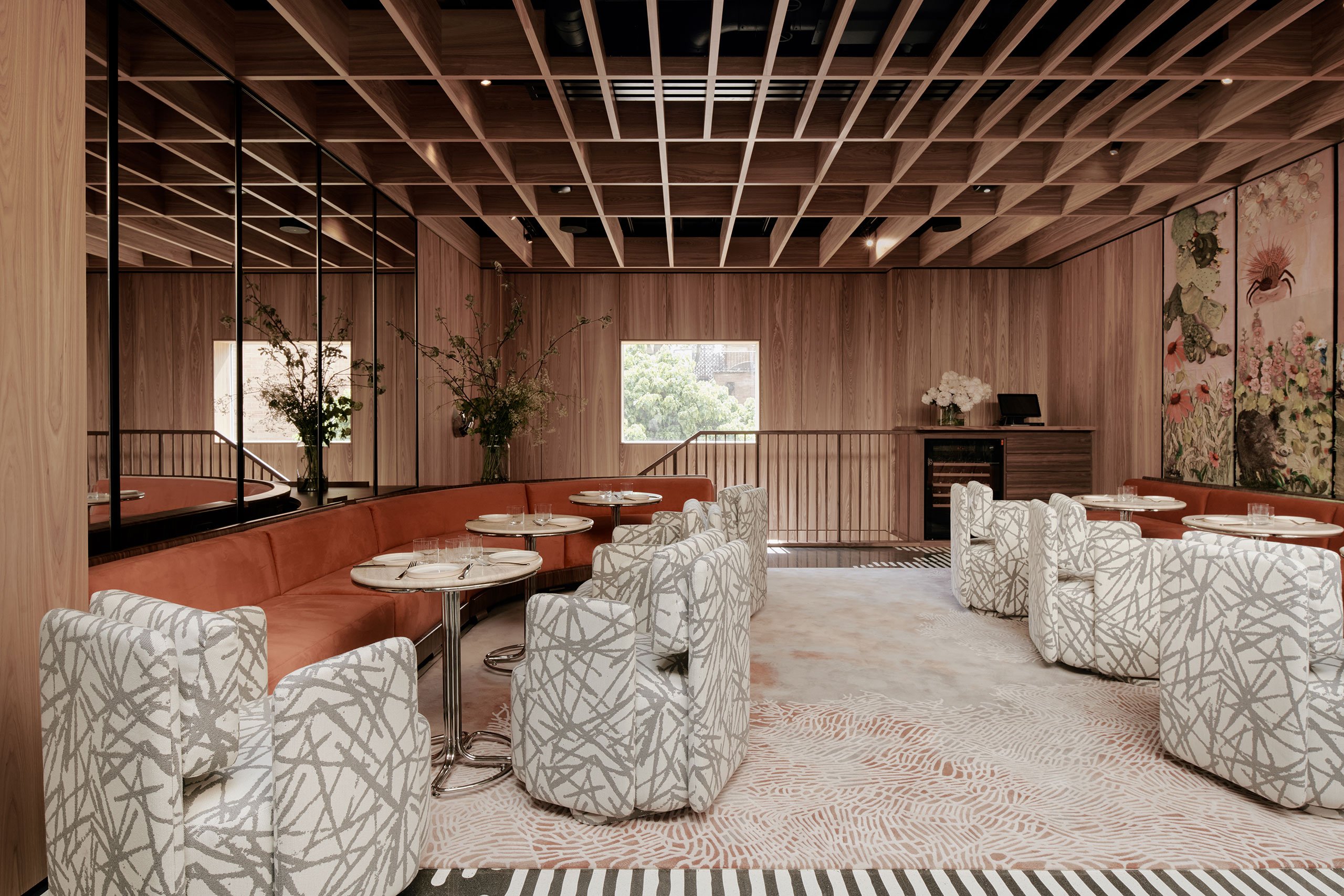
This far-reaching concept bank is located in the historical building of 2, Place de l’Opéra. The space is chock-full of completely wacky un-bank features, yet it also has a nice retro touch — the honeycombed ceiling, lovely mirrors — that gives it the elegance and respectability that the building’s history warrants and the bank’s business must convey.

Other than that, it is an almost 1,000 square-meter funhouse of colors, shapes, textures and forms with the goal to entice the customer to discover, interact, experiment and (gasp!) enjoy.


In ten specific zones, all regular banking functions from daily banking to stock-market info, private meetings, staff training can take place with the emphasis on breaking the age-old banking set-up where the client and the adviser (the teller, the banker) are on opposite sides.


All of this plus a temporary exhibition area dedicated to kids, a coffee bar, a  25 square-meter green, living wall set the tone for the unusual banking experience. Of course, such aspects as ergonomics, sustainability, proper lighting and the latest technology, are givens.


In addition to custom furniture and furnishings, Zoevox used furniture by Christophe Delcourt, Philippe Hurel, Paola Lenti, Christian Liaigre, India Mahdavi, Antonio Lupi (lavabo), Pierre Paulin and Philippe Starck,  and lighting by Sylvie Coquet, Adrien Gardère, Poul Henningsen, Marco Merendi, Karim Rashid and Patricia Urquiola. Now, can we all expect our neighbourhood banks to change? Tuija Seipell

Share It:  
Design

December 20 2010

By the late 1980s, the Praediniussingel building that had accommodated the Groninger Museum for 100 years, had become too small for the museum’s modern and contemporary art, fashion and design, and historic arts collections and exhibits. By 1994, new premises on the Verbindings Canal in Groningen, in the northern Netherlands, were designed by the Italian Alessandro Mendini and guest architects Philippe Starck from Paris, Italian Michele de Lucchi and the Coop Himmelb(l)au group based in Vienna and Los Angeles.


Since 1994, nearly 4 million people have visited, leaving behind wear and tear. The premises have now been renovated and new spaces by Antwerp-based Studio Job, Spanish designer Jaime Hayon and Maarten Baas have been added. The Info Center by Hayon is one of the coolest areas in the new building. Computer stations embedded in a many-armed desk provide information about the museum’s exhibits. Tuija Seipell

Design

December 15 2010

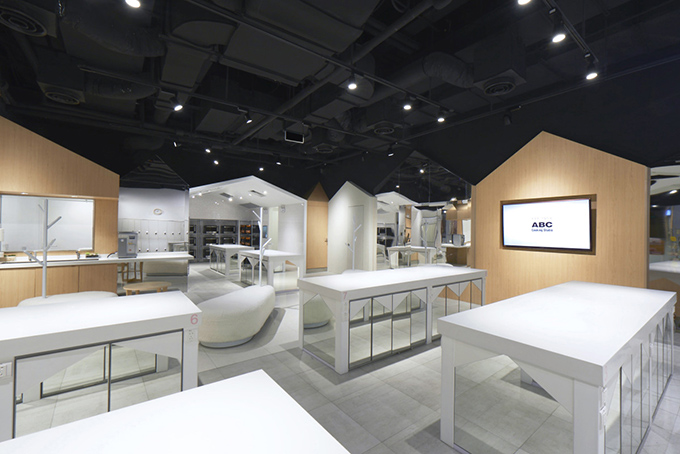
You can relax now and forget all of your bad memories (should you have any…) of drab and dreary home economics classes because the newest cooking schools are cool.


It is true that The Culinary Art School in Tijuana, Baja California, Mexico is not of the high-school variety – it is for serious chefs with high aspirations – but it oozes a new, cool confidence that could potentially turn even the most nonchalant teenager into a passionate chef.


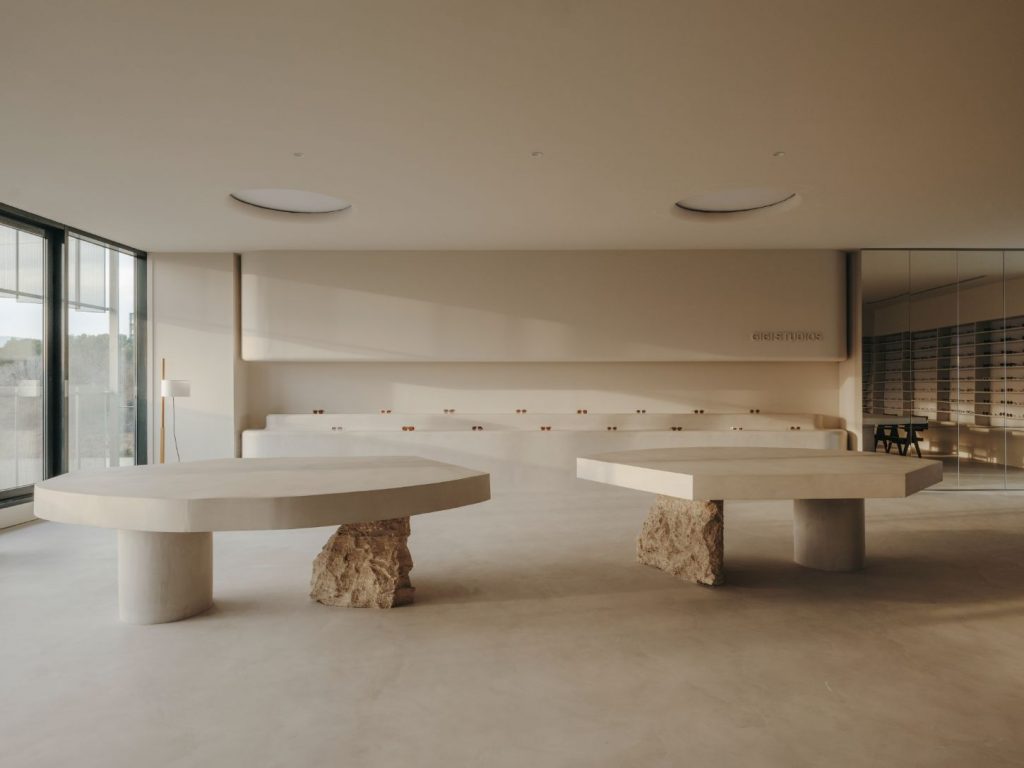
The elegant use of wood is the key attribute in The Culinary Art School. Its new building was designed by San Diego, California-based Jorge Gracia Arquitecto whose founder, Jorge Gracia, was born in Tijuana in 1973.


The entire school complex carries an air of strict order, almost an ascetic solemnity. If you didn’t notice the stoves or wine racks, you could mistake this for a place of religious study.


And, passionate chefs certainly express a fervour for food, ingredients and cooking that could be likened to religious zeal. It is easy to imagine how the colours, textures and aromas of various ingredients stand out in this kind of environment. It is like a stage for culinary creation or like a frame for gastronomic artwork.

Also in the category of cool cooking schools is the Sydney Seafood School established in 1989 and completely refurbished for its 20th anniversary. It conducts cooking classes for all skill levels and draws more than 12,000 students annually.


Words such as handsome and sexy come to mind when you look at this space, the creative work of Dreamtime Australia Design, based in Sydney, Australia.

Some time ago, we have featured Dreamtime-designed Churchill Butcher Shop in Sydney.


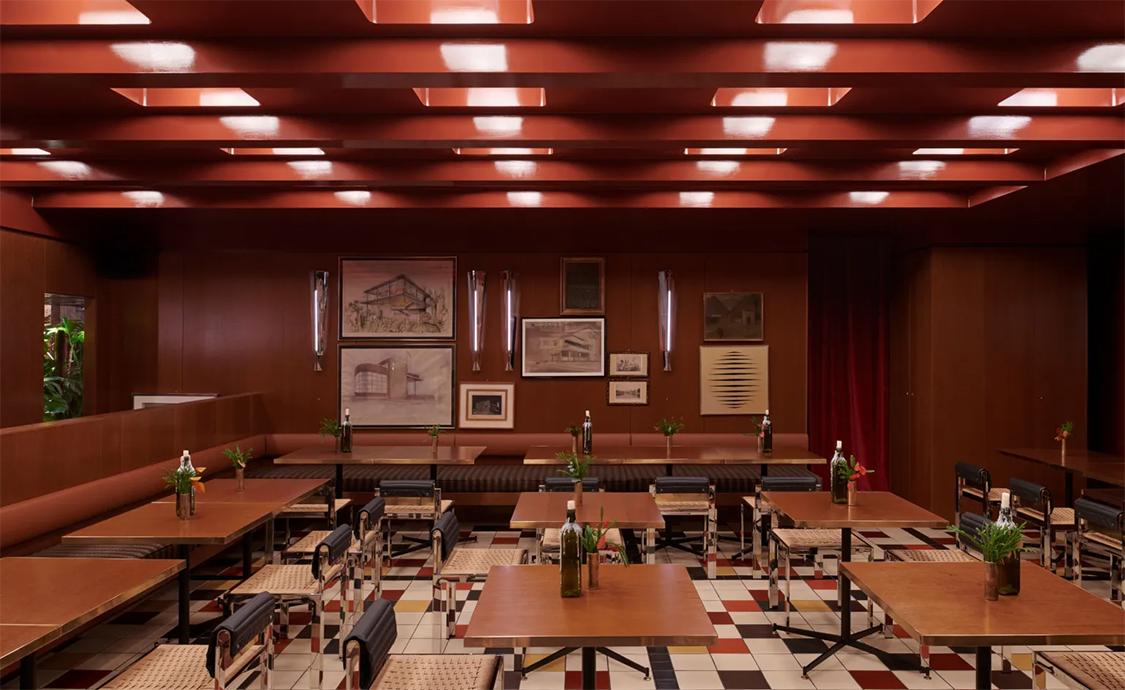
In Sydney Seafood School, a tactile intrigue, and a contrast between serious study and serious fun, are evident in every space. The school’s entry wall is a honeycombed sandstone creation by sculptor Michael Purdy.


The dark and impressive hands-on kitchen looks formidable with lots of shiny stainless steel and glass, but its gravity is lightened by chalkboard walls with “fish graffiti” as art. The cool auditorium’s walls are lined with Icelandic fish leather. In the dining room, the harbour view competes for attention with a row of fun fishnet chandeliers and their more than 6,000 little globes. Where do we sign up? Tuija Seipell
Share It:  
Design

November 2 2010

Supermachine Studio in Bangkok, Thailand, is a group of four multitasking architects that team member Pitupong “ Jack” Chaowakul describes as “small office – big projects.” “We work like guerrilla designers, everyone does everything, constantly shifting,” he told TCH.


Supermachine’s latest achievement is the interior design of two floors of one of Bangkok University’s new four-storey buildings that form the new, spectacular Landmark complex, designed by Bangkok-based 49 Group.


Supermachine’s work in the Bangkok University Creative Center (BUCC) - about 600 square meters in total – includes a workshop, library, exhibition space, viewing room and office.


According to Chaowakul, BUCC was set up as part of the government’s goal to transform the country’s economy from agricultural and industrial into the creative economy. To encourage creativity, communication and experimentation, the BUCC facility needed to be open, playful, expressive and flexible.


One of Supermachine’s solutions was the “Lo-Fi pixel wall” at the entrance. They covered a 180 square-meter wall surface with 10,000 custom-made rotating four-sided plastic pieces. Each piece has a pink, blue, green and yellow side. Students can rotate each unite and create color patterns, write messages or just experiment with the tactile wall.


In the student workshop, Supermachine enclosed the internet center in a space-ship like green pod that students can move around in the open space.


Construction at BUCC is coming to a close and the facility will open shortly for students. Supermachine is currently working on the interiors for the university's student lounge facility. - Tuija Seipell


Design

May 23 2010

Great, aesthetically pleasing design needn't be limited to traditional architectural forms such as houses and public buildings.


Utilitarian spaces, such as car parks, present architects and designers with a unique opportunity to bring beauty and harmony to the everyday functional spaces that are normally ignored by great design minds.

We're excited to report that the tide is changing, evidenced by these good-looking car parks.


Modern design is all about "experience" and these car parks pictured acknowledge that one's experience of a private or public place begins the minute they pull up in their car. Innovative developers and designers are recognising just how crucial this is - it's almost too late by the time the consumer arrives at the front door. The "experience" of good design starts well before that.

Our agency ACCESS is currently working with a few developers/city councils globally in creating the ultimate public car park and we're on the hunt for architects/designers who already have created in this space. In the know? Get in touch. Seen any other interesting car parks we should know about - send us tips - Bill Tikos

Share It:  
Design

April 27 2010

Loft Hamburg, located in a restored building in Winterhude district of Hamburg, is a private 118 square-meter residence designed by Graft. The focal point of the high-ceilinged and otherwise white space is a large pod paneled with walnut. The pod contains the residence’s kitchen and bathroom, hides its central heating, cooling and plumbing, and even provides some cupboards and bookshelves. The owner was looking to use a wide variety of materials, and the walnut pod contrasts beautifully with the soft fabrics, leather and natural stone used elsewhere in the loft.


Graft is an architecture, urban planning and design company established in 1998 in Los Angeles by German architects (,) Lars Krückeberg, Wolfram Putz, Thomas Willemeit and Gregor Hoheisel, all now in their early forties. 


Their Berlin office opened in 2001, and Beijing office in 2004. Alejandra Lillo joined Graft as the fifth partner in Los Angeles in 2007. - Tuija Seipell.

Share It:  
Design

April 14 2010

Nothing turns heads faster than a cool retro print on an über hot car, and our Space Invader and Pac Man inspired Mini Coopers had half of New York & L.A in a neckbrace from all the attention. Average Joes on the street became home-schooled paparazzi as they snapped away at the Mini on their mobile phones and forwarded them on to friends. 

If you think your design has what it takes to get wrapped around a Mini then send it in to us this month and you could see your work blazoned across our exciting new global launch.

See also our Space Invaders pop up skate ramp


Share It:  
Design

March 18 2010

In a world where people appreciate good design everywhere, cool mini hotel rooms are the latest ‘it’ trend. In Tokyo, the  Capsule Inn exemplifies the bare-essentials hotel rooms for brief use, and similar concepts are popping up at airports, train stations and downtowns around the world, replacing and mimicking the “day rooms” already existing at many airports.


Unlike Tokyo’s bed-only cabins where customers climb into a human equivalent of a honeycomb for a night’s rest, Yotel pods at Gatwick and Heathrow airports in London and Schiphol Airport in Amsterdam come in larger and more comfortable formats. These self-contained mini hotel rooms are equipped with a bed, table, HD TV and Wi-Fi.


The fourth Yotel is set to arrive in New York in 2011 with a location opening on 42nd and 10th street boasting 669 luxury rooms and the largest outside terrace in any hotel in New York

Also in Amsterdam, Citizen M has a hotel with 230 mini rooms at Schiphol Airport and a 215-room hotel in Amsterdam City. Citizen M plans to open similar hotels across Europe.

Qbic Hotels has opened two “cheap chic” hotels with mini rooms in the Netherlands: Qbic World Trade Centre Amsterdam and Qbic Maastricht, plus one in Antwerp, Belgium.

Taking the next step in rest and space efficiency, Russia’s Arch Group designed the SleepBox.


Along with an airport version of the rest pod, equipped with the usual, high-tech necessities offered by other companies, Arch Group has also designed an easy-to-relocate version fit for hostels. A small, mobile compartment, 2m (l) x 1.4m (w) x 2.3m (h), SleepBox is made of wood and MDF. SleepBox is meant to “allow very efficient use of available space and, if necessary, a quick change of layout”, making it perfect for hostels where demand and space available often come in conflict with each other. The hostel-specific SleepBox features bunk beds, flip-out tables and sockets for computers or phone chargers and not much else. Yuri Pushkin, Tuija Seipell.

Share It:  
Design

February 10 2010

City of Utrecht in the Netherlands has developed a large complex, Cultuurcampus Vleuterweide, where half of the floor plan is taken up by a school and a sports facility, and the other half includes 55 residences, a church, cultural center, theater, and a library.

It is the internet “café” of the info centre/library that sparked our imagination with its bulky, woody mass and colorful, folkloric embellishments. Wouldn’t it be amazing if more internet cafes paid this much attention to design?


The architect of the complex is Vera Yanovshtchinsky Architecten based in The Hague. Interior design and furnishings are by Assen-based AEQUO BV Architects that is known for impressive school and library work.


Throughout the entire Vleuterweide facility, AEQUO has sprinkled fun embellishments, including lime-green, lemon-yellow and azure-blue walls, and pink carpets. Furnishings and lighting fixtures also draw attention: A prim, baroque chair covered in hot-pink fabric in one corner, a group of lumpy recliners upholstered in brown flour-sack material in another. - Tuija Seipell

Share It: